How to Insert Text Box in Google Docs
Do you want to highlight important information, create sidebars, or organize content visually in your document? Knowing how to insert text box in Google Docs is one of the most useful formatting skills you can have.
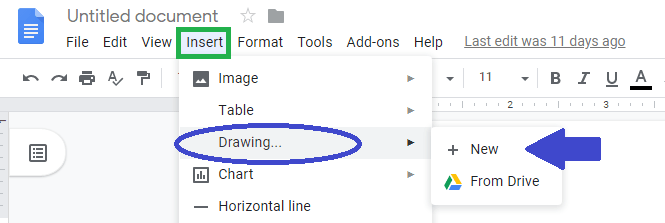
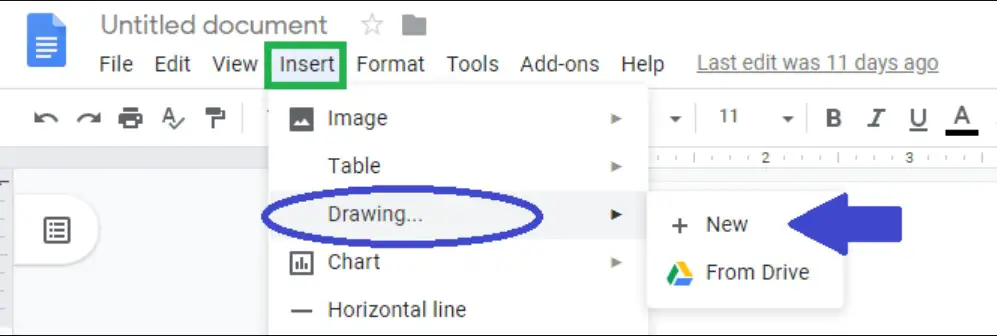
The fastest way: Go to Insert → Drawing → + New, click the text box icon, draw your box, type your text, and hit Save and Close. That’s it. Your text box appears in the document, ready to drag anywhere on the page.
In this guide, you’ll learn how to insert text box in Google Docs, customize it, move it around the page, and use alternative methods that work on both desktop and mobile devices.
How to Insert Text Box in Google Docs (Drawing Method)
The Drawing tool is the easiest way to insert a text box in Google Docs. Most users prefer this method because it allows them to create movable text boxes, customize colors, and position content anywhere in the document.
- Open your Google Docs document and click roughly where you want the text box to appear.
- Click “Insert” in the top menu bar, hover over “Drawing,” then click “+ New.”
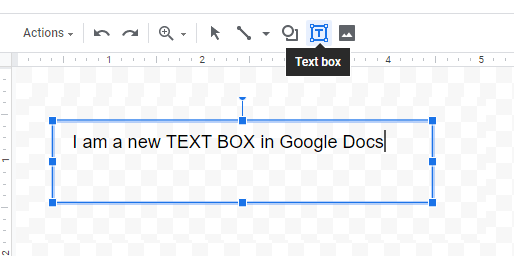
- The Drawing Panel opens. In the toolbar at the top of the panel, click the text box icon — it looks like a “T” inside a small rectangle.
- Click and drag on the white canvas to draw your text box to the size you want.
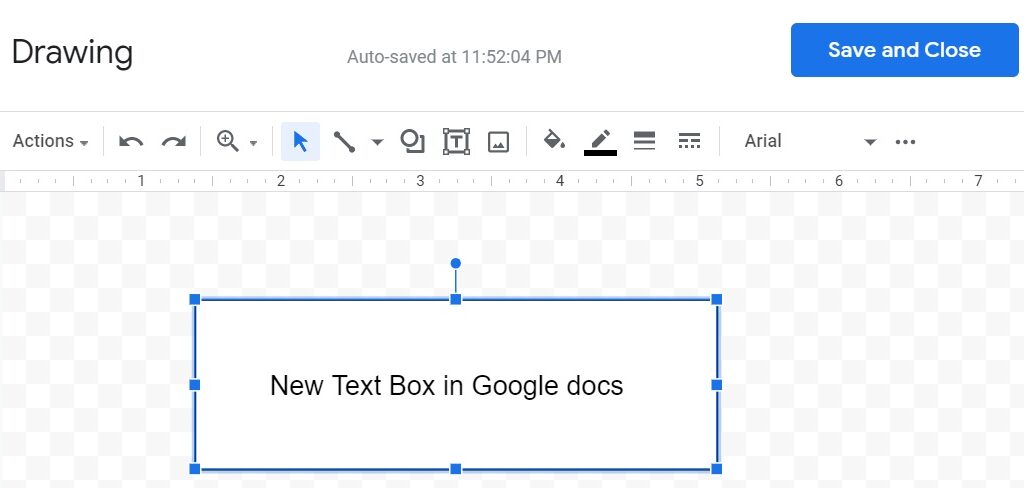
- Type your text directly inside the box. Use the toolbar to adjust font, size, color, bold, italic, or alignment.
- Click “Save and Close” in the top-right corner of the Drawing Panel. Your text box drops into the document.
That’s the easiest way to insert text box in Google Docs using the built-in Drawing feature.
Important: To edit the text box later, double-click it — not single-click. A single click selects the drawing object. Double-clicking opens the Drawing Panel where the text actually lives.
How to Customize a Text Box in Google Docs
After you create a text box in Google Docs, you can customize its appearance to match your document. Adjusting colors, borders, and fonts can help important information stand out from the rest of the content.
- Background color: Click the fill color bucket icon to add a colored background to the box — useful for callouts, warnings, or highlighted notes.
- Border color and weight: Click the border color icon to change the outline color, or set it to transparent if you want floating text with no visible box.
- Font style and size: Select your text inside the box and use the font dropdown and size field in the toolbar, just like you would in the main document.
- Text alignment: Use the alignment buttons (left, center, right) in the Drawing Panel toolbar to control how text sits inside the box.
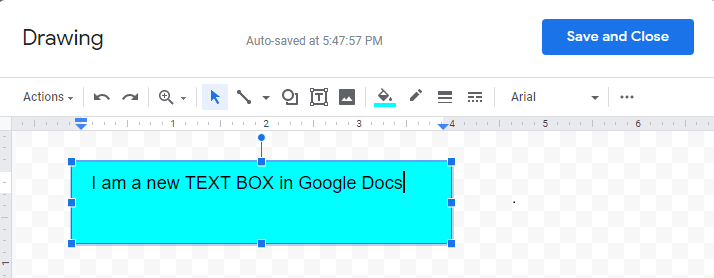
When you’re happy with the styling, click Save and Close to apply the changes back to your document.
How to Move, Resize, and Wrap Text Around a Text Box in Google Docs
After the text box is in your document, resizing and repositioning it takes just a few seconds.
- To move the text box: Click it once to select it (you’ll see a blue border appear), then click and drag it to any position on the page.
- To resize it: Click once to select, then drag any of the blue square handles on the corners or edges. Drag a corner handle to resize proportionally.
- To control how text flows around it: Click the text box once, then look for the wrap options that appear just below it — In line, Wrap text, or Break text. “Wrap text” lets your document body text flow around the box like a sidebar.
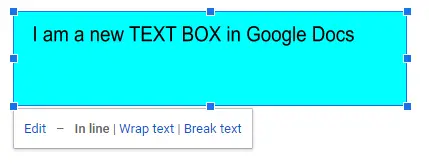
Watch out: If your text box keeps jumping around when you add text elsewhere in the document, change the wrap setting from “In line” to “Wrap text” or “Break text.” That stabilizes the box position.
How to Insert Text Box in Google Docs Using Shapes
Another popular method for users wondering how to add text box in Google Docs is to use shapes. Shapes provide additional design options and can make callouts, labels, and visual elements look more professional.
- Go to Insert → Drawing → + New to open the Drawing Panel (same as above).
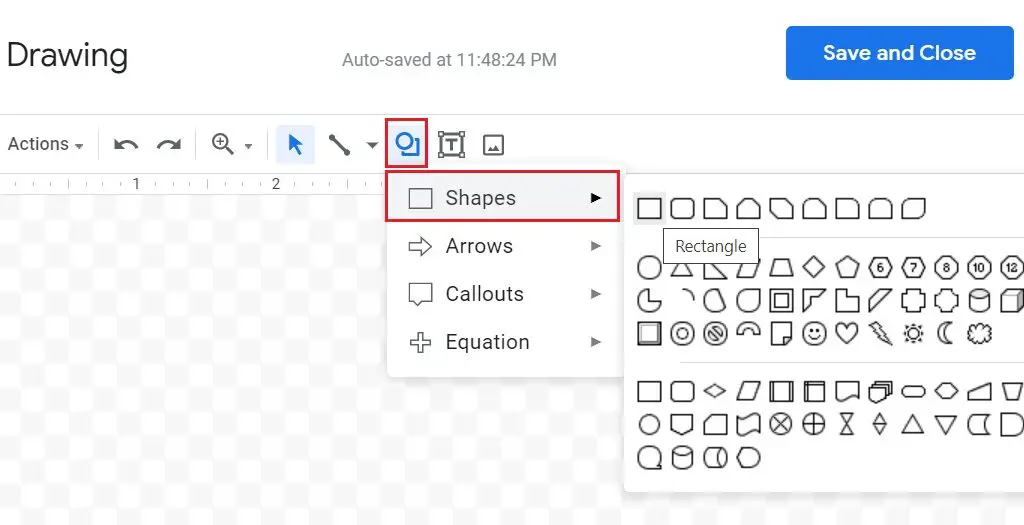
- Click the “Shape” icon in the Drawing Panel toolbar — it looks like a circle overlapping a square.
- Choose a category: Shapes, Arrows, Callouts, or Equation. For most text box use cases, go to Shapes and pick your preferred shape — rectangle, rounded rectangle, oval, and so on.
- Click and drag on the canvas to draw the shape at the size you want.
- Double-click inside the shape to activate the text cursor, then type your content.
- Style the shape using the fill color, border color, and font options in the toolbar.
- Click “Save and Close” to insert the shaped text box into your document.
How to Insert Text Box in Google Docs on Mobile
The Google Docs mobile app (iOS and Android) does not support the Drawing tool. If you try to find it, it won’t be there. For a true floating text box, you’ll need to switch to a desktop browser.
However, there is a workaround that gets close: insert a single-cell table. It looks like a bordered box, flows with your document, and works perfectly on mobile.
- Tap the + (Insert) button in the top toolbar.
- Tap Table, then set it to 1 column × 1 row.
- Tap Insert Table. A single bordered cell appears in your document.
- Tap inside the cell and start typing. It behaves exactly like a text box for most practical purposes.
This same table method also works on desktop and is actually the better choice if your document will be downloaded as a Word (.docx) file — drawing objects don’t always convert cleanly, but table cells do.
How to Remove or Delete a Text Box in Google Docs
Deleting a text box is straightforward. Click the text box once to select it — you’ll see the blue border and handles appear around it. Then press Delete or Backspace on your keyboard. The box and all its content are removed instantly.
If you accidentally delete it, press Ctrl + Z (Windows) or Cmd + Z (Mac) immediately to undo.
Quick Summary: Text Box Methods at a Glance
If you’re still wondering how to insert text box in Google Docs, the table below compares the available methods and helps you choose the best option.
| Method | Best For | Works on Mobile? | Word (.docx) Safe? |
|---|---|---|---|
| Drawing Tool (Text Box) | Floating, draggable boxes anywhere on the page | No | Sometimes |
| Drawing Tool (Shapes) | Styled boxes — ovals, callouts, rounded rectangles | No | Sometimes |
| Single-Cell Table | Inline boxes that flow with document text | Yes | Yes |