Netsh Winsock Reset: The Complete Guide to Fixing Windows Network Problems
If your Windows computer suddenly loses internet access, constantly drops Wi-Fi, or displays a frustrating “No internet, secured” error while your router works perfectly, one simple network troubleshooting tool can often fix it in seconds: the winsock reset command.
Running a winsock reset clears out corrupted data and restores your network configuration back to its default state. This step-by-step guide explains exactly what the netsh winsock reset command does, when you should use it, and how to execute it safely on Windows 10 and Windows 11.
What Is Winsock?
Winsock (Windows Sockets API) is the invisible translator built into Windows. It allows your software programs—like web browsers, email clients, and online games—to communicate with the internet. Every piece of network data sent or received by an app passes through this layer.
Over time, the winsock catalog can become corrupted due to:
- Malware removal tools
- VPN software or custom proxy configurations
- Third-party antivirus programs
- Failed Windows updates
When winsock gets corrupted, your physical connection might be perfect, but your apps won’t be able to access the web.
What Does the Winsock Reset Command Actually Do?
The netsh winsock reset command wipes away custom or corrupted settings and restores the Winsock Catalog to its default, clean state.
Unlike resetting your physical router or clearing your browser history, a winsock reset specifically targets the software layer on your PC that manages network connections. Think of it as a factory reset for your computer’s digital networking pipeline.
When Should You Run a Winsock Reset?
You should try a winsock reset command if you experience any of the following symptoms:
- “No internet access” errors while your other devices (like phones or TVs) connect flawlessly.
- Websites refuse to load in any browser, even though your Wi-Fi status says “Connected.”
- Lost internet connectivity immediately after uninstalling a VPN or antivirus program.
- Online games or apps fail to connect, while your system claims you are online.
- Persistent DNS errors, socket errors, or explicit winsock error codes.
How to Run Netsh Winsock Reset on Windows 10 and 11
Step 0: Create a System Restore Point First
Before resetting any network settings, it’s good practice to create a System Restore Point. This takes about a minute and lets you roll back your system if anything unexpected happens. Search for “Create a restore point” in the Start menu, click Create, and follow the prompts.
Step 1: Open Command Prompt as Administrator
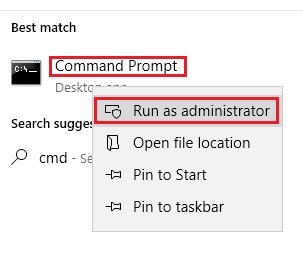
Click the Start menu, type cmd, then right-click “Command Prompt” and select Run as administrator. You must run it as admin, or the command will fail with an access denied error.
Step 2: Run the Winsock Reset Command
Type the following command and press Enter:
netsh winsock reset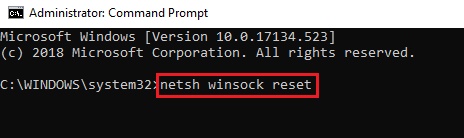
You should see a confirmation message saying the Winsock Catalog was reset successfully, along with a note that you need to restart your computer.
Step 3: Restart Your Computer
The winsock reset changes will not take effect until your system reboots. Save your open work and restart Windows.
Step 4 (Optional): Reset TCP/IP Too
If the netsh winsock reset alone doesn’t fix the issue, network technicians recommend resetting the TCP/IP stack at the same time. Open the administrator Command Prompt again, type this command, press Enter, and restart once more:
netsh int ip resetBonus: Other Useful Netsh Reset Commands
Beyond the basic Winsock reset, Windows includes several related commands worth knowing. Run these the same way — from an elevated Command Prompt, followed by a restart:
netsh winsock reset catalog– an alternate form of the Winsock reset commandnetsh int ipv4 reset– resets only your IPv4 configurationnetsh int ipv6 reset– resets only your IPv6 configurationnetsh int ip reset resetlog.txt– resets the full TCP/IP stack and saves a log file of the changes, which is handy if you need to troubleshoot further or share details with tech support
These commands work the same way across Windows 7, 8, 10, and 11 — reboot after each one before testing your connection.
Netsh Winsock Reset vs. Other Network Fixes
| Command | What It Fixes |
|---|---|
netsh winsock reset | Corrupted network software layer (Winsock catalog) |
netsh int ip reset | Corrupted TCP/IP configuration |
ipconfig /flushdns | Cached DNS records causing outdated site lookups |
ipconfig /release & /renew | Getting a new IP address from your router/DHCP server |
Frequently Asked Questions
Does a winsock reset delete my Wi-Fi passwords?
No. It only resets the software catalog. Your saved Wi-Fi networks and passwords remain completely safe.
Is the netsh winsock reset command safe to use?
Yes. It is an official, built-in Windows tool. It does not delete personal files or programs.
Will a winsock reset break my VPN?
It removes third-party modifications to your network stack. If your VPN stops working afterward, simply open the VPN app and click “Repair,” or reinstall it to restore its settings.
Does this work on Windows 11?
Yes. The netsh winsock reset process works identically across Windows 7, 8, 10, and 11.
Conclusion
The netsh winsock reset command is one of the fastest, safest, and most reliable tools for troubleshooting stubborn Windows internet issues. By pairing a winsock reset with a TCP/IP reset, you can resolve the vast majority of “no internet” errors without spending hours replacing hardware or reinstalling Windows.
Related reading: How to Clear DNS Cache on Windows | How to Factory Reset Windows 10 | How to Check Your Windows Version