How to Add Audio to Google Slides: 5 Easy Methods
Yes — you can add audio to Google Slides, but the process works a little differently than in PowerPoint. Google Slides doesn’t let you directly upload an MP3 or WAV file from your computer. Instead, you need to store the audio in Google Drive first, then insert it into your presentation. Once you know the steps, it takes less than two minutes.
This guide covers every way to How to add audio to Google Slides — on a computer, Chromebook, Mac, iPhone, and Android — plus how to record your own narration and pull audio from YouTube.
Can You Add Audio to Google Slides?
Yes. Google Slides supports inserting audio files (MP3 or WAV) as long as the file is uploaded to your Google Drive. You can also embed a YouTube video and use its audio track, or record a voiceover using your computer’s microphone and upload the recording. There’s currently no way to add audio directly from your device without going through Drive first — this is a limitation of Google Slides, not a bug.
Method 1: How to Add Audio to Google Slides From Google Drive (Most Common Method)
This is the standard way to add audio to a Google Slides presentation on a desktop or laptop.
Step 1: Upload your audio file to Google Drive
- Go to drive.google.com
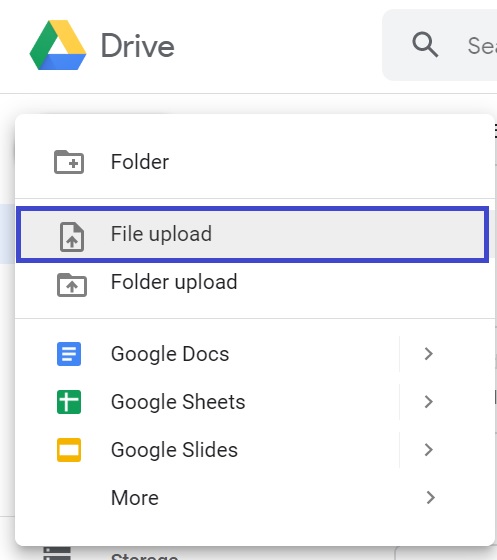
- Click New → File upload
- Select your MP3 or WAV file and wait for it to upload
Step 2: Insert the audio into Google Slides
- Open your Google Slides presentation
- Click on the slide where you want the audio to appear
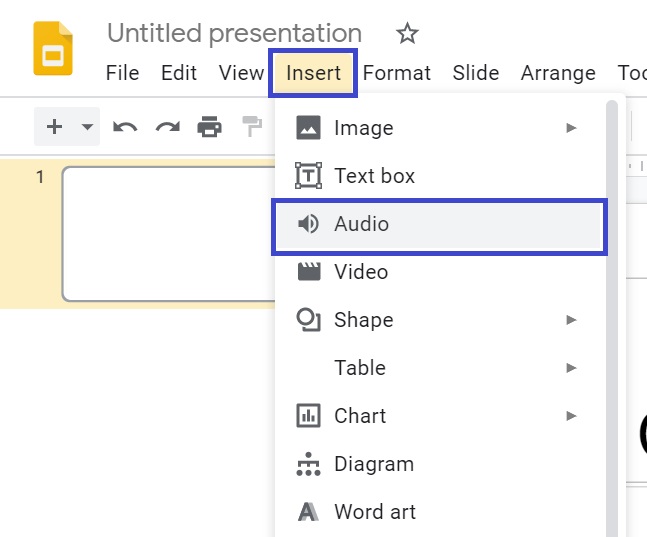
- Go to Insert → Audio
- Choose the audio file from your Google Drive
- Click Select
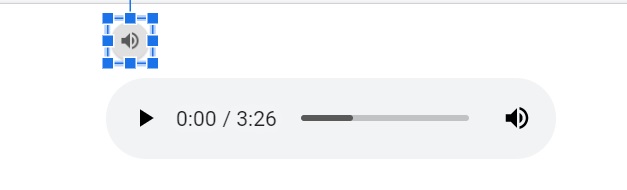
A small speaker icon will appear on your slide. You can drag it anywhere, resize it, or hide it during the presentation.
Step 3: Adjust audio playback settings
- Click the speaker icon
- Click Format options in the toolbar
- Under Audio playback, you can choose:
- Start playing: On click, or Automatically
- Volume level
- Loop audio
- Stop on slide change
- Hide icon when presenting
This is also where you control whether audio continues across slide transitions.
Customizing the speaker icon itself
Once the audio is inserted, you can also style the speaker icon so it blends better with your slide design:
- Click the icon, then use the Format options panel to adjust its color
- Increase or decrease transparency if you want it to sit subtly in a corner
- Drag to resize it smaller, or move it off the visible slide area entirely if you don’t want it seen during the presentation
Method 2: How to Record and Add Audio to Google Slides
If you want to add narration, voiceover, or spoken instructions, you’ll need to record the audio separately since Google Slides has no built-in recording tool.
- Use a free recording tool such as:
- Voice Recorder (built into Windows or Mac)
- Vocaroo (browser-based, no download needed)
- QuickTime Player (Mac)
- Record your narration and save it as an MP3 or WAV file
- Upload the file to Google Drive
- Follow Method 1 above to insert it into your slide
Tip: Record one audio clip per slide rather than one long file for the whole presentation. This makes it much easier to control when narration starts and stops as you move between slides.
Method 3: How to Add Audio to Google Slides From YouTube
If your audio source is a YouTube video (music, a clip, or a spoken segment), you don’t need to download anything.
- Open your slide
- Go to Insert → Video
- Paste the YouTube URL or search for the video
- Click Select
- Click the inserted video and open Format options
- Under Video playback, set it to Autoplay when presenting if you want it to start automatically
This method embeds the full video, but you can resize it small or move it off-slide slightly so only the audio is noticeable during playback.
How to Add Audio to Google Slides on a Chromebook
The process on a Chromebook is identical to the desktop method, since Google Slides runs in the browser either way:
- Upload your audio file to Google Drive using the Files app or drive.google.com
- Open Google Slides in Chrome
- Go to Insert → Audio
- Select your file and adjust playback settings
No extensions or extra apps are needed — Chromebooks handle this natively through the browser.
How to Add Audio to Google Slides on a Mac
Mac users follow the same browser-based process as Windows:
- Upload the audio file to Google Drive (drag and drop works directly from Finder)
- Open your presentation in Google Slides via Chrome, Safari, or Firefox
- Go to Insert → Audio and select the file
If you’re recording narration on a Mac, QuickTime Player’s File → New Audio Recording option is a fast built-in way to capture a voiceover before uploading it to Drive.
How to Add Audio to Google Slides on iPhone or Phone (Mobile Limitations)
This is one of the most searched questions, and the honest answer is: you currently cannot insert new audio directly from the Google Slides mobile app on iPhone or Android. The Insert → Audio option only appears in the desktop/browser version of Google Slides.
Workaround for iPhone and Android:
- Upload your audio file to Google Drive using the Drive app on your phone
- Open a mobile browser (like Chrome) and go to slides.google.com
- Switch the browser to “Desktop site” mode (in Chrome: tap the three-dot menu → Desktop site)
- Open your presentation and use Insert → Audio as you would on a computer
Alternatively, if you already added audio to the presentation on a desktop, it will play normally when you present from your phone — the limitation is only on adding new audio from the mobile app itself.
How to Add Audio to a Google Slides Presentation: Quick Recap
| Step | Action |
|---|---|
| 1 | Upload MP3/WAV file to Google Drive |
| 2 | Open Google Slides, select the slide |
| 3 | Click Insert → Audio |
| 4 | Choose your file from Drive |
| 5 | Adjust volume, autoplay, and loop settings under Format options |
Troubleshooting: Why Can’t I Add Audio to Google Slides?
If the Insert → Audio option is missing or grayed out, check the following:
- You’re on the mobile app — switch to desktop mode in a browser instead
- The audio file isn’t uploaded to Drive yet — Slides can only pull from files already stored in your Drive
- Wrong file format — only MP3 and WAV files are supported; convert other formats (like M4A) before uploading
- You’re viewing, not editing — make sure you have edit access to the presentation, not just “view only” access
Frequently Asked Questions
Can I add audio to Google Slides that plays automatically? Yes. After inserting the audio, open Format options and set “Start playing” to Automatically instead of On click.
Can you add background music that plays across all slides? Yes. Insert the audio once, then in Format options, turn off “Stop on slide change” so it continues playing as you move through the presentation.
Is there a way to add audio to Google Slides without Google Drive? No — Google Slides requires the audio file to be stored in Google Drive before it can be inserted. There’s currently no option to upload directly from your local device within Slides itself.
How do I add audio to Google Slides during a transition? Google Slides doesn’t support audio tied specifically to a transition animation. Instead, set the audio to play automatically on the slide where the transition occurs, or keep “Stop on slide change” turned off so the sound carries over.
Can I add audio to Google Slides presentations for free? Yes, this entire process — Google Drive storage, Slides editing, and audio insertion — is free with any standard Google account.
Why is my audio not playing in Google Slides? This is usually caused by one of a few things: the audio file was moved or deleted from Google Drive after being inserted, the file isn’t shared with the right permissions if others are viewing the presentation, or “Present” mode is being used without an internet connection. Re-uploading the file and re-inserting it usually resolves the issue.
Final Thoughts
Adding audio to Google Slides is simple once you understand the one key requirement: the file needs to live in Google Drive first. Whether you’re adding background music, narrated instructions, or a YouTube clip, the same core steps apply across desktop, Chromebook, and Mac. For mobile users, switching to desktop mode in your browser is currently the only way to insert new audio directly from an iPhone or Android device.
With autoplay, looping, and volume controls all available in Format options, you have solid creative control over how sound plays into your presentation — even without PowerPoint’s more built-in audio tools.