Virtual CloneDrive: What It Is & How to Use It (Guide)
Virtual CloneDrive is a free tool that lets you mount disk image files — ISO, BIN, CCD, and similar formats — as virtual CD/DVD drives on your Windows PC. Instead of burning an image to a physical disc, you can “insert” it into a virtual drive with a double-click and use it exactly like a real CD, DVD, or Blu-ray drive. In this guide, we’ll cover what Virtual CloneDrive is used for, how to set it up, and how to use it to mount your image files.
What Is Virtual CloneDrive?
Virtual CloneDrive is a free utility developed by Elaborate Bytes (also distributed as RedFox Virtual CloneDrive) that allows you to mount and use disc image files as virtual drives on your computer. It creates a virtual optical drive that behaves just like a physical CD, DVD, or Blu-ray drive — except it only exists virtually, so you never need the actual disc.
You can add up to 15 virtual drives at once on a Windows PC, and image files can be mounted from your hard disk or a network drive with a simple double-click.
What Is Virtual CloneDrive Used For?
Virtual CloneDrive is mainly used to access disc image files without needing the original physical disc. Common uses include:
- Mounting ISO images of software, games, or drivers so you can install or run them directly
- Accessing backed-up copies of CDs and DVDs stored as image files on your hard drive
- Playing audio, video, or data discs that have been converted to image format
- Freeing up physical drive bays by replacing frequently used discs with virtual ones
- Working with disc images faster than a physical optical drive can read them
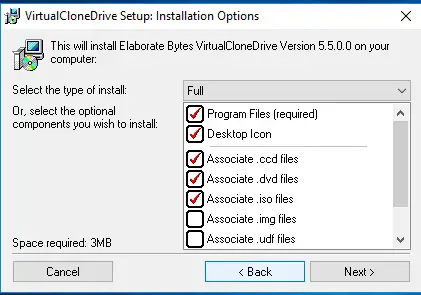
Supported formats include ISO, BIN, IMG, UDF, DVD, and CCD.
System Requirements
- A Windows PC with a minimum 500 MHz processor and 256 MB RAM
- Windows XP, Vista, 7, 8, 10, or 11 (32-bit or 64-bit)
How to Download and Set Up Virtual CloneDrive
Download Virtual CloneDrive first, then follow these steps to install it.
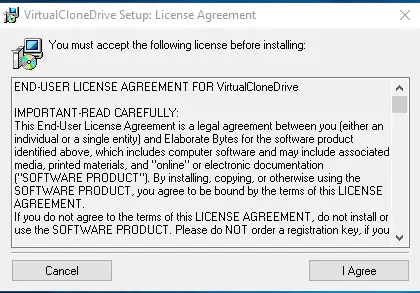
- Double-click the downloaded installer to run the setup, accept the license agreement, and click Next to proceed.
- Choose the disc image formats you want Virtual CloneDrive to support from the list shown, then click Next.
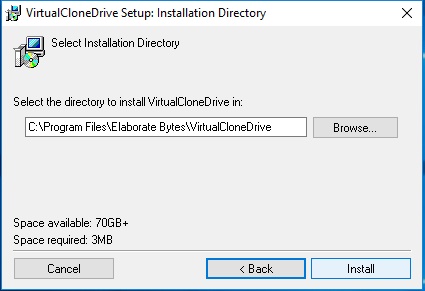
- Select the folder where you want to install Virtual CloneDrive, then click Install.
Once installation finishes, you’re ready to start mounting image files. Here’s how.
How to Use Virtual CloneDrive
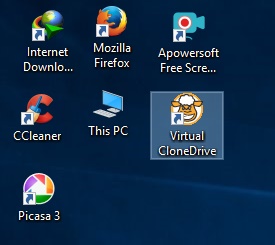
After installation, double-click the Virtual CloneDrive icon on your desktop to open it.
A dialog box will appear showing “Number of Drives.” Choose how many virtual drives you want — for example, 3 drives.
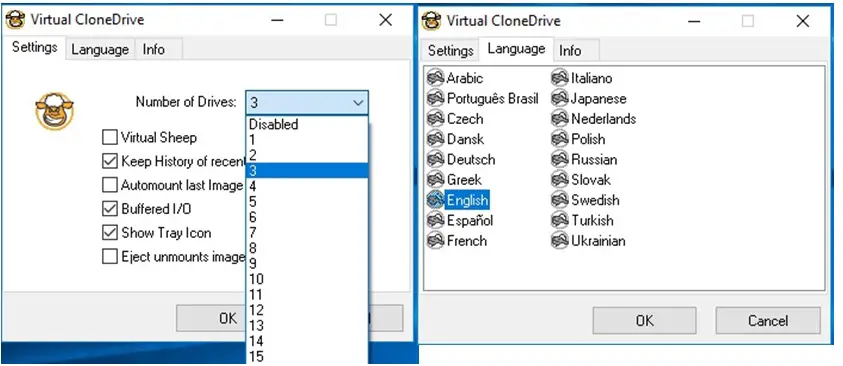
From the Language tab, select the language you want to use, then click OK.
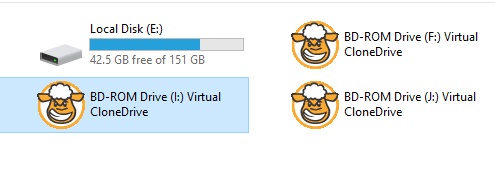
Your virtual drives will now appear in This PC (or My Computer on older versions of Windows).
Mounting an Image File
- Right-click on the Virtual CloneDrive icon in This PC.
- Choose “Virtual CloneDrive” from the menu, then select “Mount.”
- Browse to the folder containing your ISO (or other supported) image file and select it.
Once mounted, the virtual drive behaves exactly like a physical CD/DVD drive. You can browse its contents, open files, install software, or play media — just as you would with a real disc. When you’re done, you can unmount the image the same way.
Frequently Asked Questions
What is Virtual CloneDrive used for?
It’s used to mount and access ISO, BIN, and other disc image files as if they were physical CDs, DVDs, or Blu-ray discs — without needing the actual disc.
Is Virtual CloneDrive still supported?
Virtual CloneDrive was originally distributed by SlySoft, which shut down in 2016. It’s now maintained and distributed by Elaborate Bytes and RedFox and remains free to use on modern Windows versions, including Windows 10 and 11.
How many virtual drives can I create?
You can create up to 15 virtual drives at the same time on a single Windows PC.